
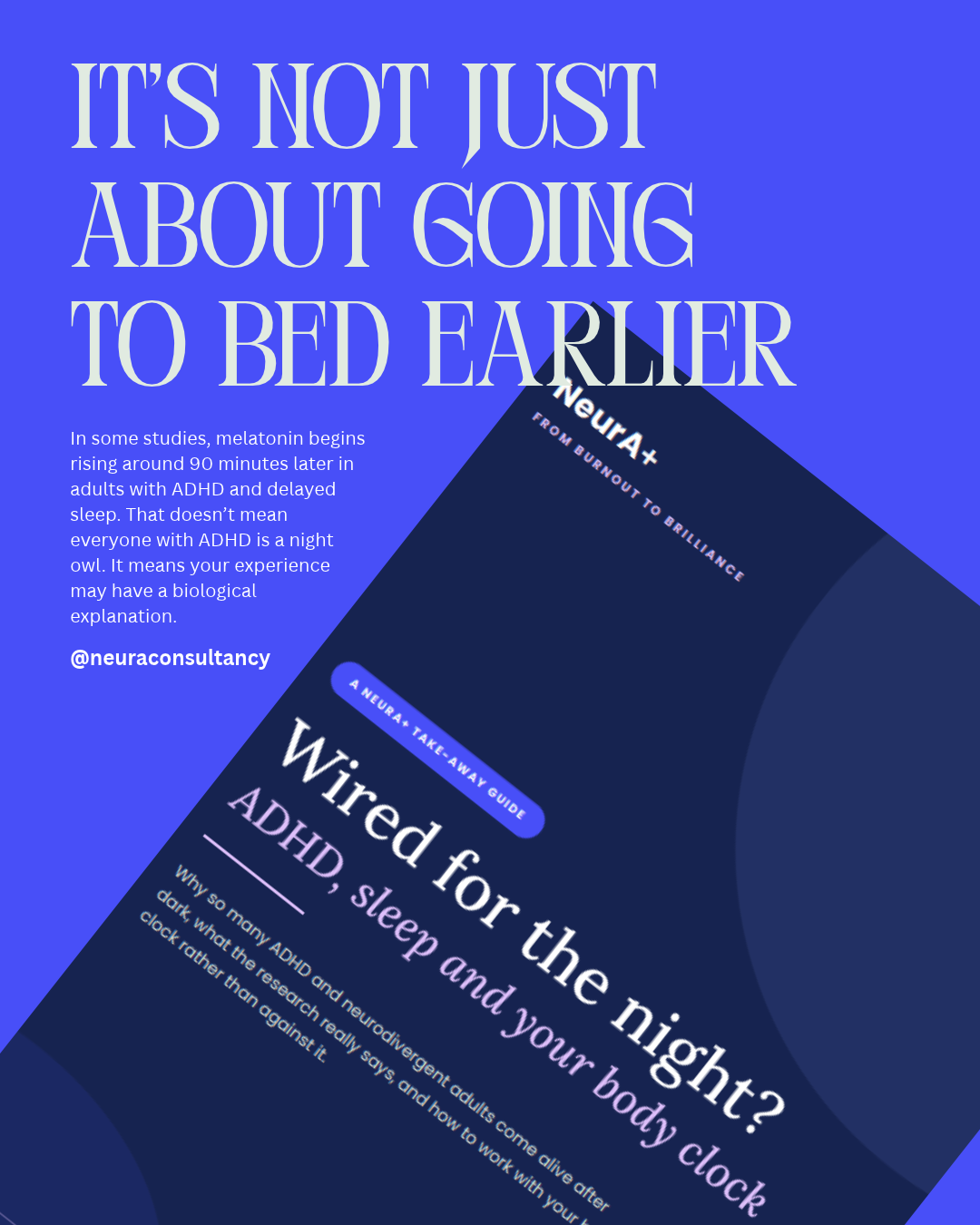
Wired for the Night?
ADHD, Sleep and Your Body Clock
Why does your brain wake up when the world goes to sleep?
You spend the day feeling tired or distracted. But as evening arrives, your thoughts become clearer and your energy returns. Sound familiar? For many adults with ADHD, the body clock can run later. Discover why, and learn to work with your natural rhythm rather than against it.
What’s inside your sleep guide?
• Understand your body clock and its connection with ADHD.
• Explore the science behind eveningness and delayed sleep.
• Discover why fewer interruptions and hyperfocus can make late nights feel productive.
• Learn how disrupted sleep may relate to attention and memory.
• Try five gentle, practical strategies for supporting your rhythm.
Bonus: My Sleep Tracker
Stop guessing about your sleep. Start noticing your patterns. The printable tracker helps you record bedtime, approximate sleep onset, waking time and hours slept, score each night from 0 to 10, and note morning daylight or evening screen habits. A weekly review helps you spot your best and hardest nights, identify when you feel most alert, and choose one small change.
Fill it in each morning and track for at least two weeks. It is information, not a test.
Better sleep starts with understanding your brain
You don’t have to become a morning person overnight. Sometimes the most useful first step is understanding what is happening, without judgement.

Created by Diane Alexander
BACP-accredited psychotherapist, executive coach and founder of NeurA+.
With over 25 years of experience supporting people with trauma, stress, burnout and neurodiversity, Diane created these resources to make the science accessible and help you take realistic steps towards understanding your sleep.